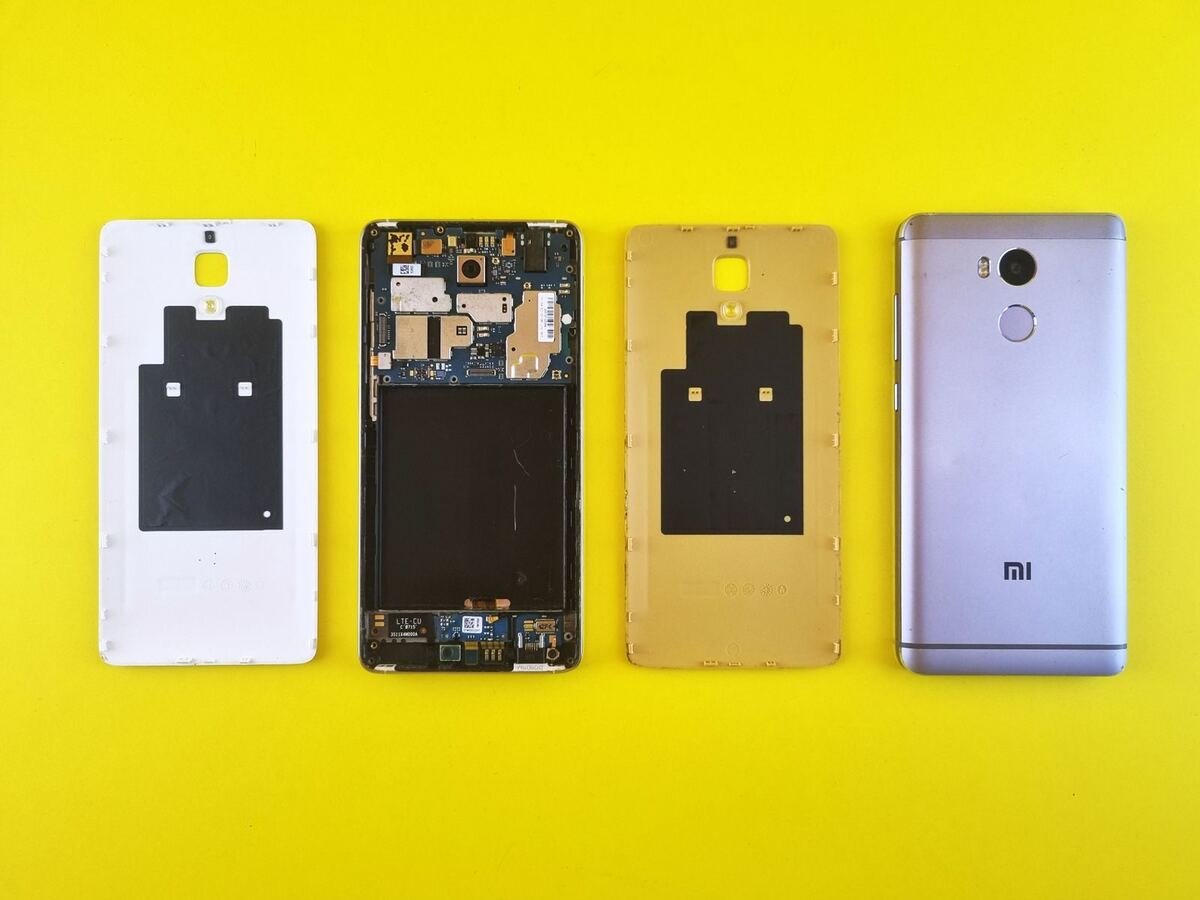
Opened phones with the back removed — phone repair Düsseldorf
EU Battery Regulation

Replaceable phone batteries from 2027: what the EU really requires

From February 2027, batteries in devices must be replaceable by users themselves. That's what many headlines say, and for smartphones it's only half the story. Here you'll find what the two regulations involved actually say about phones.

Published Topic Buying advice

Replaceable phone batteries from 2027: what the EU really requires

What the Battery Regulation says

The EU Battery Regulation has the number (EU) 2023/1542. How easily a battery must be removable from a device is set out there in Article 11.

According to it, manufacturers must make sure that end users can easily remove and replace the battery throughout the entire lifetime of the device. This means the whole battery, not individual cells inside it. Removal counts as easy if commercially available tools are enough and neither heat nor solvents are needed. Special tools are only allowed if they come with the device at no extra cost.

This obligation will apply from 18 February 2027. The date is set by Article 96 of the regulation.

  • The device must come with instructions and safety information for the replacement, which must also be permanently available online
  • Replacement batteries must remain available for at least five years after the last unit of a model was placed on the market
  • Repair businesses and end users must be able to get these replacement batteries at a reasonable price
  • Software must not make replacement with a compatible battery more difficult

The exceptions

Article 11 makes exceptions for some devices. For the first two in the list, the manufacturer may leave the replacement to independent professionals; for the last one, the obligation of easy replacement doesn't apply at all.

  • Devices that are washable and specifically built for environments where they are regularly exposed to splashing water, water jets or immersion, and only where this is necessary for safety
  • Certain professional medical devices for imaging and radiotherapy, as well as devices for laboratory diagnostics
  • Devices that need a continuous power supply and where a permanent connection to the battery is necessary for safety reasons or to protect data

Smartphones aren't named there

Smartphones don't appear in any of these exceptions. Still, for phones the real answer is found elsewhere, namely in a sentence of Article 11 itself. It states that specific EU rules for electrical devices concerning battery replacement by users remain unaffected by this obligation.

Such rules already exist for smartphones. They are in the Ecodesign Regulation (EU) 2023/1670, which has applied since June 2025. Its Annex II sets out how the battery of a smartphone must be replaceable. According to the Commission's reading, as written down in its guidelines on the Battery Regulation, these ecodesign rules take precedence for smartphones.

The Commission can also extend the list of exceptions itself. This power is also set out in Article 11.

What the ecodesign rules require for the battery

The Ecodesign Regulation gives smartphone manufacturers two options. With the first, a layperson must be able to replace the battery themselves, without tools or with simple or supplied tools, and in the place where they use the device.

With the second option, the replacement may be left to people with basic repair skills who work with commercially available tools. In return, the battery and the device have to meet stricter durability requirements.

  • The battery must manage at least 1,000 full charge cycles while keeping a set share of its capacity
  • After just half of these cycles, the regulation already requires a higher minimum value
  • The device must be dust-tight and survive half an hour under water
  • The regulation sets the depth for this water test at one metre

What changes for buyers

For smartphones, the more important deadline was therefore already 20 June 2025. Since then, newly launched models have had to meet one of the two options. A smartphone that takes the second option may therefore still have its battery built in so that a repair business replaces it.

Article 11 is aimed at manufacturers and sellers who place devices on the market. The date in February therefore changes nothing about the phone you have in your pocket today.

Still, the Ecodesign Regulation brings something practical for buyers. New smartphones must show information about the battery in the settings or in another accessible place. This includes the battery's manufacturing date and the date it was first used. The device must also record the number of full charge cycles and the measured condition of the battery. When you buy a used device, this is a real help.

The supply of replacement batteries is also regulated. Under the Ecodesign Regulation, manufacturers must keep smartphone batteries available for repair businesses for at least seven years after a model is no longer sold. Whether end users can also get them directly from the manufacturer depends on which of the two options the device takes. What else the regulation says about spare parts and updates is covered in the article on the right to repair.

What stays the same

Neither regulation requires a removable battery cover like older phones had. Water protection doesn't have to disappear either. On the contrary, if a manufacturer takes the second option of the ecodesign rules, it must build the device dust-tight and protected against immersion.

Software remains an issue. The Commission's guidelines explicitly name pairing spare parts to a single device as an example of how software can hinder a replacement. According to them, a notice about a non-original battery is allowed as long as the device keeps working normally. What this pairing means in everyday life is explained in the article on parts pairing.

For you, little changes about a battery replacement with us, because we already replace batteries. We work with original parts. On request, we also fit tested aftermarket parts.

This article reflects what is written in the regulations and in the Commission's guidelines. It is not legal advice.

Frequently asked questions

Quick answers

Does my next phone have to have a battery I can replace myself?

Not necessarily. Smartphones fall under the ecodesign rules, and they also allow a battery that only a repair business replaces. In that case, though, the device must be dust-tight and protected against immersion, and the battery must last especially long.

Does the 2027 battery rule also apply to phones I already have?

No. The obligation is aimed at manufacturers and sellers who place new devices on the market. We will still repair your current phone, including the battery.

How long must replacement batteries be available for a smartphone?

Under the Ecodesign Regulation, manufacturers must keep them available for repair businesses for at least seven years after the model is no longer sold. This applies to smartphones launched since June 2025.

Where can I see how old the battery in my phone is?

For smartphones launched since June 2025, the battery's manufacturing date must be shown in the settings or in another accessible place. Exactly where is up to the manufacturer. For older devices, we read out the condition when you drop off the device, if you'd like.

Your question isn't here? Call us on 0211 26134549 or send us a repair request.

Request

Get your device checked now

Tell us which device it is and what is wrong with it. We get back to you with the price and how long it takes.

  • No obligation: a request is not an order
  • Free diagnosis and quote
  • A phone number or email is all we need
Prefer to call?0211 26134549
Request a repairStep 1 of 5

What brand is your device?

Four short questions. Then we get back to you with the price and how long it takes.

Have your device looked at now

Tell us what's not working, and we'll have the right part ready. We look at your device for free and give you a quote. Then you decide in your own time whether we repair it.

4.8 out of 5742 reviews on Google
WhatsApp